
On June 22, Hanoi will simultaneously break ground on five metro lines worth more than VND 1.3 quadrillion
21 June, 2026

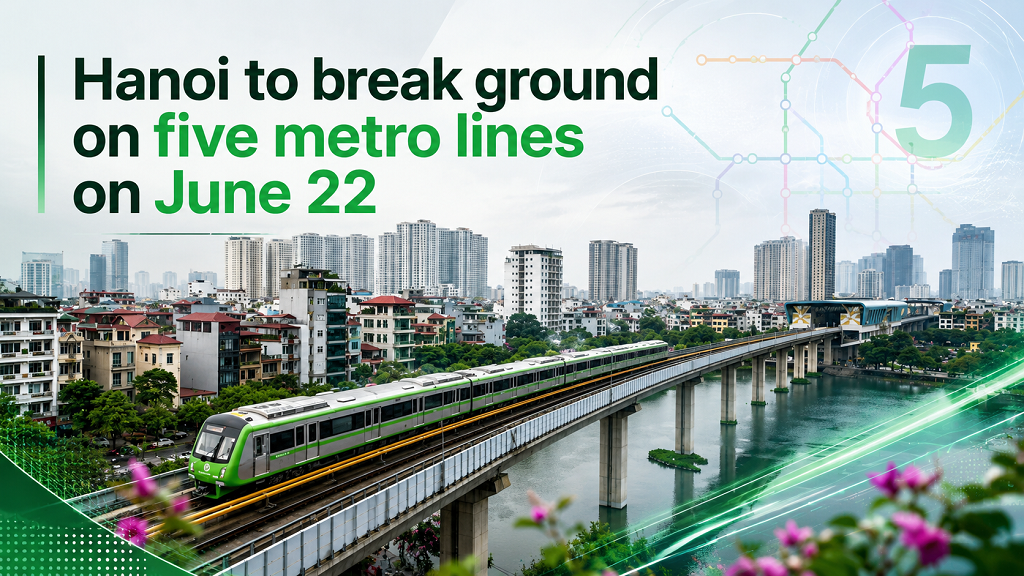
Five urban railway lines, with total investment of more than VND 1.3 quadrillion, are scheduled to break ground simultaneously on June 22, according to Hanoi’s plan.
Under the proposed plan, Hanoi will begin construction on five key urban railway, or metro, lines on June 22, including Lines 1, 2, 8, 10 and 14. All are considered strategic routes in the city’s future transport network.
Line 1, about 81 km long, will connect Hung Vuong Stadium – the railway industrial park – Ngoc Hoi – Hanoi Station – Yen Vien – Thu Lam multi-purpose urban area – Noi Bai Airport, with total investment estimated at around VND 389.527 trillion.
Line 2, about 56.5 km long, will connect Noi Bai Airport – Tran Hung Dao – Thuong Dinh – Hung Vuong Stadium, with total investment estimated at around VND 271.708 trillion.
Line 8 will span about 91 km, including around 66 km within Hanoi. It will connect Hoa Lac – Son Dong – Mai Dich Ring Road 3 – Linh Nam – Duong Xa, with investment for the Hanoi section estimated at around VND 317.393 trillion.
Line 10, about 43 km long, will connect Co Loa – Vo Chi Cong – Ring Road 3 – Ring Road 2.5 – Times City urban area, with total investment estimated at around VND 206.786 trillion.
Line 14 will be about 32 km long, including around 27 km within Hanoi. It will connect Thang Long Bridge – Hong Ha – Ocean Park, with investment for the Hanoi section estimated at around VND 129.842 trillion.
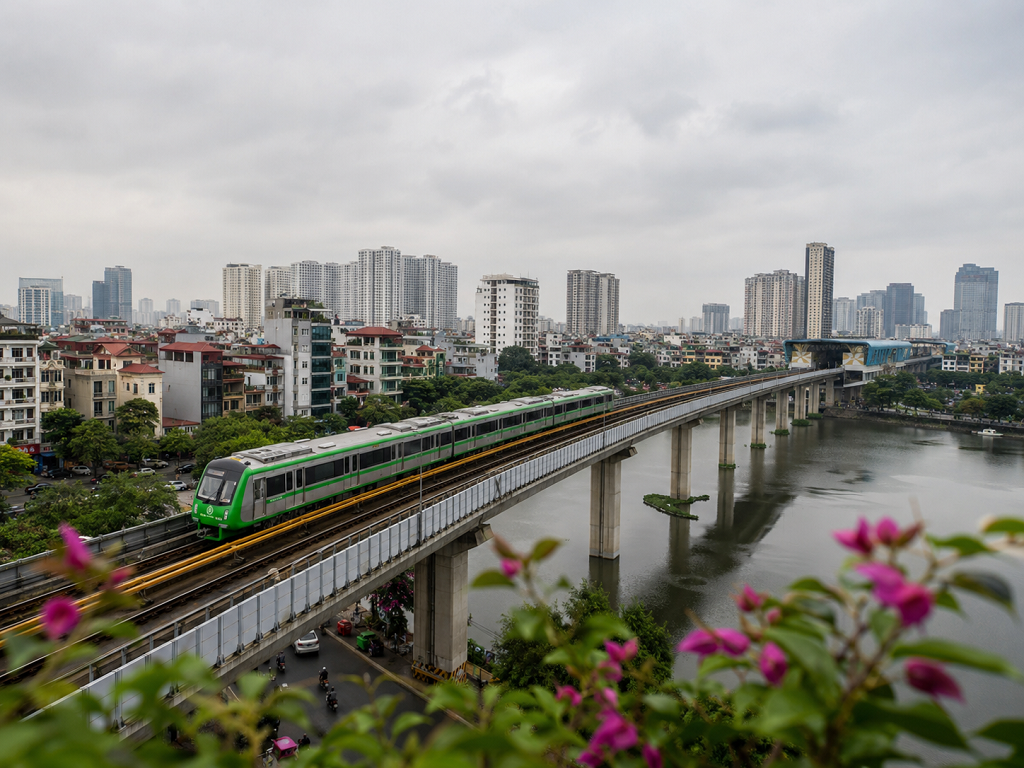
Mr. Nguyen Ba Son, Deputy Head of the Hanoi Metropolitan Railway Management Board, said the event marks a fundamental shift in investment thinking. Whereas Hanoi previously developed each line separately, the city is now moving toward simultaneous investment in multiple lines, with the aim of completing a mass public transport network in a shorter period of time.
Under the capital’s master plan with a 100-year vision, the city will develop a network of 18 urban railway lines with a total length of about 979 km. Between now and 2035, Hanoi aims to complete around 500 km of urban railway, with the remainder to be finished in the 2035–2045 period.
Mr. Son said public investment in the five metro lines is of particular importance, as they will serve as backbone axes guiding urban development under a multi-polar, multi-directional model. The metro lines will not only help solve traffic challenges, but also open up new development spaces, create modern urban areas, and promote the renovation of existing urban districts.
Beyond their significance for transport and urban planning, the simultaneous investment in these urban railway lines is also expected to become a driver of double-digit economic growth, in line with the target assigned to Hanoi by the Government in the coming period.
Hanoi currently has two metro lines in operation: the Cat Linh–Ha Dong Line and the elevated section of the Nhon–Hanoi Station Line. The city is also building several other metro lines.